Politecnico di Milano (PoliMi)
Politecnico di Milano (PoliMi) has developed a fruitful relationship with business and productive world by means of experimental research and technological transfer. Research is strongly linked to didactic and this allows PoliMi to achieve high quality results at an international level. Research constitutes a parallel path to that formed by cooperation with the industrial system. PoliMi takes part in several research, sites and training projects collaborating with the most qualified European universities. PoliMi's contribution is increasingly being extended to other countries: from North America to Southeast Asia to Eastern Europe. Today the drive to internationalization sees PoliMi taking part into the European and world network of leading technical universities and it offers several courses that are entirely taught in English. The Department of Chemistry, Materials and Chemical Engineering "Giulio Natta" was founded in 2001, with solid foundations and with skills to face all the engineering challenges that involve the correlations between the molecular aspects of materials and the application of products. The Department's common vision is that the sciences and technologies of chemistry, chemical and materials engineering, and life sciences significantly contribute to identify safe, cost-effective and sustainable solutions to current challenges in multi-disciplinary fields such as processes, industrial, civil and industrial security, energy, health, the food sector, the environment and renewable resources. The result is a natural ability to collaborate synergistically with the other Departments of Politecnico di Milano, the chemical industry, the process industry in various application areas and institutional interlocutors (Regional, National and International). The Department has more than 150 teaching staff members, 50 technical-administrative staff, over 200 PhD students and almost 100 research fellows. Some relevant common facilities and laboratories within the Department are: the Laboratories of Chemical Analyses equipped with instruments for the elemental analysis of non-volatile samples, for the thermal and spectrophotometric analyses and a GC-MS instrument; the Large Equipment Laboratory of Nuclear Magnetic Resonance and Mass Spectrometry for routine analyses and original research with the addition of HPLC-MS with electrospray source (ESI) and quadrupole ion trap detector; the Laboratory of Microstructural Analysis of Materials, with optical microscopes, a Scanning Electron Microscope with energy dispersive X-ray spectrometer, a laser profilometer, a probe scanning microscope operating as STM, AFM or MFM, an X-ray diffractometer for powders and thin films. The research unit of the PI is part of the group Mat4En2 (Materials for Energy and Environment) that operates in the field of materials for alternative energy and environmental sustainability. The group has a well-recognized experience in the field of preparation and characterization of materials. The research team acquired experience on the preparation of graphene-based materials for electrochemical devices, sustainable materials for depollution, and characterization techniques such as X-Ray Diffraction (XRD), InfraRed Spectroscopy (FT-IR), ThermoGravimetric analysis (TG), Scanning Electron Microscopy (SEM), Electrochemical Impedance Spectroscopy. Mat4En2 labs are equipped with conventional laboratory equipment for materials preparation via chemical synthesis, solid state reaction, coprecipitation, and wet chemistry in general. Facilities for dip, blade, spin-coating on polymeric, ceramic and metallic geometries, and oven and furnaces for thermal treatment up to 1500 °C are also available.

Andrea Basso Peressut
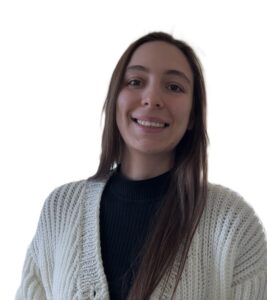
Andrea Basso Peressut obtained his PhD cum laude in Materials Engineering (2024), focusing on the preparation and characterization of innovative self-assembling electrolytes for proton exchange membrane (PEM) fuel cells, specifically investigating functionalized graphene oxide (GO). Prior to this, he earned his B.Sc. (2014) and M.Sc. cum laude (2019) in Materials Engineering and Nanotechnology. Currently, he holds a research fellowship, dealing with structured photocatalytic materials for treating hybrid pollutants in air and water streams. His research activity allowed him to develop a strong expertise in the production of GO-based slurries, membranes, and coated 3D substrates, as well as in the interpretation of the results of several characterization techniques, i.e., microscopy (optical, SEM), spectroscopy (FTIR, Raman, UV-Vis, EDX, XPS, ICP-OES, electrochemical impedance), chromatography (HPLC, ionic), X-ray diffraction, thermogravimetry, optical contact angle, total organic carbon, and polarization curves. He co-supervised more than 20 master and bachelor theses dealing with the preparation, characterization, and testing of GO-based materials for application in PEM fuel cells and wastewater treatment. Additionally, he is a contract teaching assistant for two courses, i.e., Chemistry and Materials for Energy and Ceramic Technology, taught to students of several M.Sc. engineering programs. He is also co-author of more than 20 publications (over 240 citations, h-index 10) and more than 30 contributions to national and international conferences. Within the SMARTER project, he works on the preparation and characterization of GO-based membranes, and on titania-based coatings on both membranes and PU foams.
Natalia Elia
Natalia Elia completed both her bachelor’s and master’s degrees in Materials Engineering and Nanotechnology at Politecnico di Milano. Her background combines materials science with an interest in sustainable and innovative solutions.
During the thesis period, Natalia focused on sustainable building practices, investigating the chemical, mineralogical, geotechnical, and mechanical properties of the soil mixture used in the construction of a rammed earth pavilion in Northern Italy, combining locally sourced soils and by-products materials. Natalia also developed a simple digital tool able to support rammed earth designers in the mix design phase.
Shortly after graduating, Natalia joined the Mat4En2 research group as a research fellow, working within the SMARTER project on the development and characterization of innovative structured photocatalysts for sustainable and efficient wastewater treatment.
Saverio Latorrata
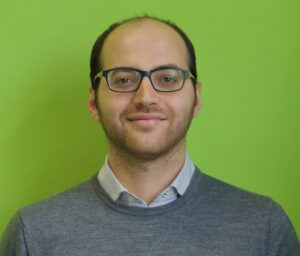
Saverio Latorrata received the MSc degree in Chemical Engineering (2008) and PhD in Materials Engineering (2014) at Politecnico di Milano, Italy. Currently he is an Associate Professor at the Department of Chemistry, Materials and Chemical Engineering of the same institution teaching four courses in the field of material science applied to electrical materials and alternative energy production/storage devices. His current research interests are mainly related to materials for both wastewater treatment and clean energy generation, with a special focus on circular economy. In detail, he is tinvolved in the development of novel self-assembling graphene-based membrane filters and of titania-coated foam-like structures for capture of heavy metal ions and degradation of organic pollutants in industrial and agricultural wastewater. Concerning materials for clean and alternative energy production, S.L. has been working for more than ten years on proton and electronic conductors based for electrochemical energy generators, in particular proton exchange membrane (PEMFC) and solid oxide fuel cells (SOFC); a relevant part of his research has been devoted to mitigating mechanisms of degradation of such materials with a special focus on the related sustainability aspects. S.L. is also laboratory supervisor of several master students and PhD candidates, and reviewer for more than twenty international scientific journals on materials science, energy and depollution. He collaborates with companies on research projects on electronic/electric devices and materials for wastewater treatment. For the SMARTER project, he is the Principal Investigator of the whole project, in particular coordinating the experimental activities of the PoliMI research unit on the preparation of GO-based materials for adsorption and degradation of hybrid pollutants. The results of his research are collected in 74 articles in peer-reviewed international journals (citations: 1362, H-index 22, Scopus April 2026). He has attended national and international congresses, presenting over 40 oral communications and posters.
Università di Milano Bicocca (UniMiB)
NanoMat@Lab - Department of Materials Science
https://www.mater.unimib.it/en/research/research-areas/enviroment-and-energy-materials/chemistry-inorganic-and-hybrid-materials-nanomatlab
The Laboratory of Inorganic and Hybrid Materials Chemistry (NanoMat@Lab) was founded by Prof. Franca Morazzoni and focuses on the synthesis, using soft chemistry, and the functional characterization of pure and hybrid inorganic materials for energy conservation.
The main research areas are nanostructured materials for catalysis, photocatalysis, and energy storage, and inorganic nanofillers for multifunctional polymer nanocomposites. The first area focuses on the synthesis, using soft-chemistry methods, of oxide nanoparticles with controlled morphology (e.g., TiO2, ZnO, MoO3) and tunable porous systems (macro/mesoporous silica or Metal-Organic Frameworks, MOF), and the study of their (photo)catalytic mechanisms (formation and interfacial reactivity of paramagnetic defects) using spectroscopic and magnetoscopic techniques. On the other hand, the research focuses on the preparation, via bottom-up approaches, of oxide nanoparticles (primarily ZnO and SiO₂) and polysiloxanes (PSQ) with controlled morphological and surface characteristics, used in a wide range of applications (e.g., the automotive sector, high-performance dielectrics, gas barriers).
Barbara di Credico
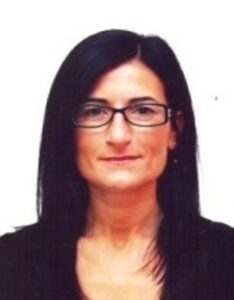
Doctorate in Chemistry; Ph.D. in Inorganic Chemistry (University of Florence; 2009).
She is an associate professor at the University of Milan-Bicocca – Department of Materials Science.
She has advanced experimental experience in the design and development of nanocomposite, hybrid, and smart materials, as well as a deep understanding of inorganic chemistry. Her research interests include nanostructured oxides and organic-inorganic hybrid materials for environmental remediation (photocatalysis), and the design and development of rubber composites.
Lorenzo Alberti
Doctorate and Master’s degrees in Industrial Chemistry (University of Bologna); Ph.D. in Materials Science and Nanotechnology (University of Milan-Bicocca; 2026).
He is a postdoctoral researcher at the University of Milan-Bicocca, Department of Materials Science.
He has experience in the synthesis and functionalization of hybrid nanoparticles for the reinforcement and cross-linking of polymer nanocomposites, and is interested in their application as active materials in water treatment and the capture of atmospheric pollutants.